
The Fall of Atlantis: Samhain, the Day of the Dead & the Great Remembrance
Oct 17, 2026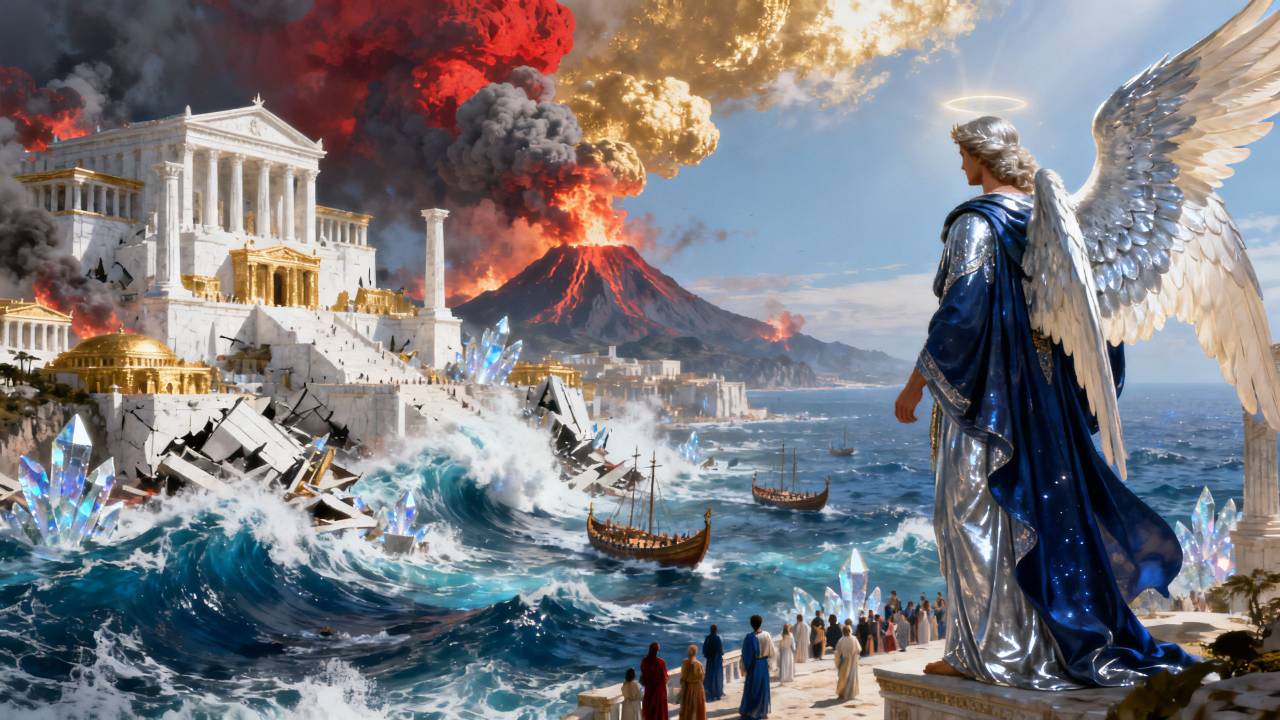
Exploring the ancient mysteries of Atlantis, the thinning of the veil, and the sacred journey from destruction to renewal.
Every year, as October draws to a close and the days grow shorter in the Northern Hemisphere, we enter a season that has long been associated with the mysteries of death, transformation, and the ancestral realms. Across different cultures, ceremonies of remembrance invite us to honour those who have passed, reconnect with our ancestors, and contemplate the relationship between the physical and spiritual worlds.
For the ancient Celts, this season was marked by Samhain, a sacred turning point between the harvest and the approaching winter. In Mexico, Día de los Muertos honours departed loved ones through beautiful altars, offerings, music, and celebration. Although these traditions developed within their own distinct cultures and histories, they share a profound recognition that our relationship with those who came before us continues beyond physical death.
Within the Atlantean mystery traditions, there is another story connected to this sacred window of time. It is the remembrance of a great civilization, the millions of souls who perished during its final destruction, and the survivors who carried its wisdom into distant lands.
Could the spiritual significance of this season also hold echoes of humanity's collective remembrance of Atlantis?
The Final Fall of Great Atlantis
According to certain Atlantean teachings and remembrances, the destruction of Atlantis was not a single event but a series of devastating cataclysms unfolding over approximately 200,000 years. Each upheaval altered the landscape of the once magnificent civilization, until the final destruction, believed to have occurred around 12,000 years ago, brought the remaining lands beneath the waters of the Atlantic Ocean.
Atlantis has been remembered as a civilization of extraordinary spiritual knowledge, advanced technologies, sacred temples, and a profound understanding of the relationship between humanity, the Earth, and the cosmos. Yet its history also carries important teachings about the misuse of power, the consequences of spiritual imbalance, and the choices that ultimately determine the direction of a civilization.
In the accounts of its final days, the destruction was immense. Earthquakes shook the land, volcanic fires illuminated the heavens, and great walls of water swept across the remaining cities. Smoke and ash filled the atmosphere, turning the Sun a fiery red for many moons afterward. Millions of souls were lost as the ocean reclaimed the lands they had called home.
Yet even amid this devastation, there were those who escaped, carrying with them the memories, knowledge, and sacred traditions of their beloved Atlantis.
King Votan and the Last Days of the City of the Golden Gates
One of the most moving accounts preserved within certain Atlantean remembrance traditions concerns King Votan, sometimes associated in esoteric interpretations with the Norse god Odin.
As the final destruction approached, Votan is remembered as one of the last rulers of Atlantis, standing above the harbour of the magnificent City of the Golden Gates. Recognizing that the remaining lands could no longer be saved, he ordered the great ships to be filled with provisions, animals, books, and the precious knowledge of his civilization.
His final instructions were not simply about survival. He called upon his people to remain proud of their homeland, to preserve their wisdom, and above all, to remember the importance of peace among themselves.
According to the remembrance, Votan instructed his young son to lead one group of survivors toward the rising Sun, while his grandson was entrusted with those travelling toward the setting Sun. In this way, the people of Atlantis would journey in different directions, carrying fragments of their civilization into the wider world.
Votan himself remained upon his high perch, offering guidance and encouragement as the ships departed. His voice continued to call out across the harbour until it was overcome by the cries of the people and the tremendous force of the rising waters.
The image of a king choosing to remain with his homeland while ensuring that its people and wisdom survived is deeply symbolic. It speaks to the responsibility of leadership, the preservation of knowledge, and the extraordinary sacrifices made during times of profound transformation.
Although the physical temples and cities of Atlantis were lost, the story reminds us that the true inheritance of a civilization lives within the people who carry its wisdom forward.
The Great Migration and the Wisdom That Survived
Atlantean traditions describe survivors escaping aboard ships that travelled both through the waters and, in some accounts, through the air. Their journeys carried them toward the British Isles, France, Spain, Portugal, Egypt, the Mediterranean islands, Northern Africa, and across the Atlantic to North and South America.
Within these remembrance traditions, connections have been proposed between the Atlantean migrations and the later civilizations of the Maya, ancient Egypt, the Andean regions of Ecuador and Peru, and the Atlantic coastlines of Canada and the United States.
The British Isles hold a particularly fascinating place within this story.
Some esoteric teachings associate the legendary Tuatha Dé Danann of Ireland with the survivors of Atlantis, suggesting that they carried ancient spiritual knowledge into the Celtic lands. In Irish mythology, the Tuatha Dé Danann are remembered as an extraordinary people associated with supernatural abilities, sacred objects, and the Otherworld. Their traditions belong to Ireland's own rich mythological heritage, while their proposed Atlantean origins form part of a later mystical interpretation.
Through this lens, the construction of sacred stone monuments, the veneration of the Sun, and the preservation of ceremonial knowledge become possible echoes of an older spiritual inheritance.
Across generations, the survivors and their descendants would have adapted to new landscapes, developed new languages, and established new communities. Their stories changed as they passed from one generation to the next, gradually becoming woven into the myths, legends, and sacred traditions of their adopted homelands.
And perhaps among the most enduring memories was the remembrance of the night their homeland disappeared beneath the sea.
Samhain and the Sacred Remembrance of Atlantis
Samhain, traditionally observed around October 31 and November 1, marks an important turning point in the ancient Celtic seasonal calendar. It signals the completion of the harvest and the beginning of the darker half of the year, a period associated with introspection, ancestral remembrance, and the mysteries of the Otherworld.
In many contemporary spiritual traditions, Samhain is understood as a time when the veil between the physical and spiritual worlds becomes particularly thin, allowing us to feel a deeper connection with those who have passed.
Within the Atlantean remembrance teachings, October 31 holds another significance: it is associated with the final fall of Great Atlantis.
According to this interpretation, the survivors who escaped the destruction continued to honour the souls who had perished, remembering not only their families and loved ones but the loss of an entire civilization. Over time, these acts of remembrance are believed to have contributed to a wider spiritual inheritance surrounding the sacred season of the dead.
There is something profoundly moving about the possibility that an ancient collective memory could continue to resonate through generations, finding expression in different cultures and ceremonies.
Samhain invites us to consider the relationship between endings and beginnings. The harvest is complete, the Earth prepares for winter, and life enters a quieter period of transformation. Within the Atlantean remembrance, this same symbolism reflects the ending of one great chapter of human experience and the beginning of another.
For those who survived Atlantis, the destruction of their homeland would have marked both an unimaginable loss and the beginning of a new existence.
Their world had ended, yet their journey continued.
The Three Days of Remembrance
Within the Atlantean teachings I share, the period from October 31 through November 2 carries a beautiful symbolism of destruction, remembrance, and renewal.
October 31 — The Final Fall of Atlantis
This day represents the final destruction of the remaining Atlantean lands and the immense transition experienced by those who perished. It is a time to honour the souls of Atlantis, contemplate the choices that contributed to its fall, and remember the sacred responsibility that accompanies spiritual knowledge and power.
November 1 — Honouring the Ancestors
The following day is associated with mourning and remembrance. In these teachings, survivors are described as travelling upon the Atlantic Ocean, offering prayers for those who had been lost and honouring the homeland they would never see again.
Through ceremony, offerings, and the sharing of memories, they sought to preserve their connection with the souls of their ancestors. This symbolism resonates with the broader season of remembrance, including All Saints' Day and the traditions that honour the departed.
November 2 — The Dawning of a New Era
The third day represents renewal and the continuation of life. The survivors carried their knowledge, spiritual practices, and sacred traditions into new lands, where they would contribute to the development of future generations.
This day reminds us that even the most profound endings contain the possibility of new beginnings. Although Atlantis had fallen, the wisdom preserved by its survivors continued its journey through humanity.
Together, these three days invite us to contemplate the full cycle of transformation: an ending, the sacred space of remembrance, and the emergence of something new.
Día de los Muertos and the Celebration of Ancestral Life
Across the Atlantic, the Mexican celebration of Día de los Muertos offers another beautiful expression of humanity's enduring relationship with the ancestral realms.
Observed primarily on November 1 and 2, Día de los Muertos brings together Indigenous Mexican traditions of honouring the dead with later Catholic observances. Families create colourful ofrendas, or altars, decorated with photographs, candles, flowers, favourite foods, and meaningful objects to welcome and remember their departed loved ones.
Rather than focusing solely on sorrow, the celebration honours the continuing presence of family, memory, and love. Music, storytelling, food, and gatherings become expressions of gratitude for those whose lives helped shape the generations that followed.
While Día de los Muertos has its own distinct cultural origins, its themes offer a meaningful parallel to the Atlantean remembrance of those who were lost.
In both, we encounter the understanding that remembrance is an active expression of love. Through our ceremonies and traditions, we honour the lives of those who came before us and recognize the ways their wisdom continues through us.
The similarities among ancestral traditions across the world invite reflection upon the deep human need to honour death as part of life's greater journey.
Within the Atlantean spiritual perspective, they also invite us to consider whether some of these feelings of connection and remembrance may resonate with memories far older than our present lifetimes.
The Thinning Veil and the Memory of the Soul
For those who feel a spiritual connection to Atlantis, this season can bring an unexpected depth of emotion. Some experience vivid dreams, heightened intuition, or a sense of familiarity with ancient places and stories. Others may feel drawn toward the ocean, sacred ceremonies, or the remembrance of ancestors they cannot identify through their present family lineage.
Within the teachings of reincarnation and soul remembrance, these experiences are sometimes understood as echoes of previous lifetimes or connections to the ancient world.
The fall of Atlantis is particularly significant because its story carries both extraordinary beauty and profound sorrow. It speaks of a civilization that reached remarkable heights of spiritual and technological development, while also facing the consequences of choices that disrupted its harmony.
Yet remembrance need not centre only upon the tragedy.
We can also honour the courage of those who survived, the wisdom they preserved, and the determination to begin again in unfamiliar lands. Their story reminds us that spiritual evolution continues through periods of both creation and transformation.
During Samhain, we are invited to turn inward, honour our ancestors, and reflect upon what we wish to carry forward. It is a beautiful time for meditation, journalling, candlelight ceremonies, and quiet connection with the spiritual realms.
Perhaps the greatest gift of remembrance is the opportunity to recognize what remains sacred within us, even as the world around us changes.
Archangel Azrael: A Guide Through Transformation
As we enter this sacred season of remembrance, Archangel Azrael offers a gentle and compassionate presence for those seeking comfort, spiritual understanding, and connection with loved ones who have passed.
Often known as the Angel of Death and Transition, Azrael is associated with the sacred passage between worlds. Within angelic healing traditions, his presence is understood to bring peace during times of grief, support through profound life changes, and reassurance as we contemplate the eternal nature of the soul.
For those who feel a connection to the remembrance of Atlantis, Azrael can also be invited into meditation as a guide for exploring emotions surrounding endings, ancestral memories, and the transformation of old experiences into wisdom.
You might light a candle, sit quietly, and invite his loving presence as you honour those who have journeyed before you. Allow yourself to reflect upon the people, experiences, and teachings that have shaped your life, offering gratitude for the wisdom that continues to unfold.
Samhain is not only an ending, it is a beginning. Within the dark, new light is born. Within remembrance, we find restoration.
And maybe that is one of the greatest legacies of Atlantis. Although its temples disappeared beneath the ocean, the wisdom, love, and remembrance of its people continued through the generations that followed.
The physical world may change, but the sacred knowledge we carry within our souls continues its journey.
Continue Your Journey with the Archangels of Atlantis
If you feel called to deepen your connection with the angelic realms, I invite you to explore the Archangels of Atlantis Class Library, where you can discover teachings, sacred frequencies, healing practices, and spiritual wisdom associated with the Archangels and their Divine Rays.
Explore the Archangels of Atlantis Class Library
You can also experience angelic guidance in a more personal way through my new Archangels of Atlantis App — Your Angelic Temple in Your Pocket. Created to bring ancient wisdom into everyday life, the app offers a beautiful space for spiritual reflection, personalized guidance, meditation, and deepening your connection with the Archangels.
Discover the Archangels of Atlantis App (launching on Oct 27, 2026)
May this sacred season remind you of the beauty of remembrance, the wisdom of your ancestors, and the extraordinary journey of your eternal soul.
RA MA TI MA RA
With love,
Priscilla
SUBSCRIBE FOR WEEKLY LIFE LESSONS